
How to Choose Solar Panels for Your Mobile Home in Southern California
Choosing the Best Solar Panels for Mobile Homes in Southern California
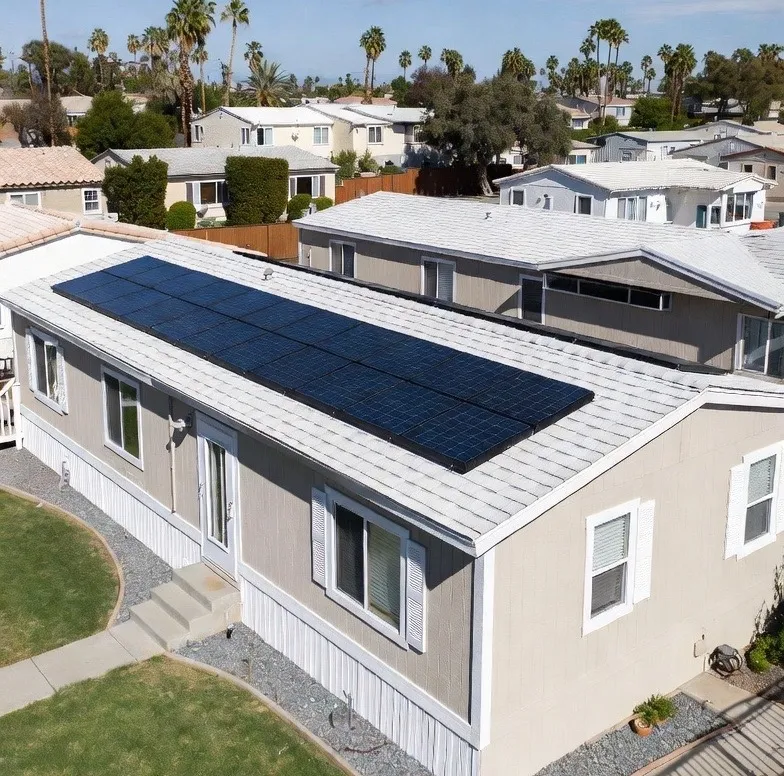
Mobile and manufactured homeowners in Southern California face rising energy costs, limited roof area, and structural constraints that make choosing the right solar panels a distinct challenge. This guide explains who benefits from mobile-home solar, how different panel technologies compare by weight and efficiency, what realistic installation costs look like in Southern California, and how to size systems including batteries under current NEM 3.0 dynamics. Readers will learn practical steps for permitting under HUD and California HCD rules, lightweight mounting options for older roofs, and maintenance strategies to keep systems producing reliably. The article covers panel types (monocrystalline, polycrystalline, thin-film, flexible), an explicit cost-component breakdown, and calculation examples for typical mobile-home energy profiles so you can estimate panel counts. Throughout, the focus is on actionable advice tailored to manufactured homes so you can move from evaluation to a confident installation plan.
Why Choose Solar Panels for Your Mobile or Manufactured Home in Southern California?
Solar panels deliver on-site electricity generation that lowers utility bills, increases resilience during outages, and reduces environmental impact for mobile and manufactured homes in Southern California. On-site generation reduces purchased kWh and exposure to volatile utility rates, producing predictable energy costs when paired with financing or storage, which is particularly valuable in regions with high time-of-use pricing. Solar also provides backup capability and can increase a home’s market appeal, while lightweight mounting solutions minimize structural work for older roofs. The following list highlights the top local drivers and homeowner benefits to make the decision clearer and actionable.
- Lower and more predictable energy costs: Solar generation cuts monthly utility bills and reduces exposure to rate spikes.
- Improved resiliency: Panels combined with batteries offer backup power during outages and grid events.
- Environmental impact: On-site renewable generation reduces household carbon emissions and supports local grid reliability.
These benefits point directly to the next practical question: which panel types best match mobile-home roofs and budgets.
Mobile Home Power is a specialized solar panel installation company exclusively serving mobile and manufactured homeowners in Southern California. Primary services include installation of solar panels for mobile and manufactured homes, free consultation and energy analysis, plan design and installation tailored to manufactured homes, and assistance controlling energy rates with predictable solar energy bills. They provide useful information about solar power for mobile homes and manufactured homes and lead potential customers to discover and purchase their services by requesting a free estimate or quote. This combination of niche focus and a low-friction next step helps homeowners move from benefits to a tailored plan that respects HUD and HCD requirements.
What Are the Key Benefits of Solar Energy for Mobile Homes?
Solar energy delivers quantifiable savings, resilience, and environmental benefits that suit mobile-home living in Southern California. Mobile and manufactured homeowners can see substantial reductions in monthly bills — up to 50 percent savings is achievable for many households depending on system size, consumption habits, and panel orientation — which directly improves household budgets and long-term energy predictability. Solar arrays also provide resiliency in outages when paired with battery storage, and they contribute to local grid relief by reducing peak demand. Understanding these advantages helps frame choices about panel type, system sizing, and investment timing.
- Cost savings: Reduces purchased electricity and can lower bills up to roughly half for many households.
- Predictable payments: Financing and fixed-payment plans can smooth energy expenses over time.
- Resilience and backup: Batteries can supply critical loads during outages.
Recognizing these benefits leads to a closer look at how solar offsets rising local energy costs and the practical mechanisms behind bill reductions.
How Does Solar Power Help Control Rising Energy Costs in Southern California?
Solar controls energy costs by replacing utility-supplied kilowatt-hours with on-site generation and by reducing peak-period consumption through strategic production and storage. Solar production directly displaces energy that would otherwise be purchased at retail rates, and batteries allow time-shifting of solar energy to high-cost periods under time-of-use pricing. Recent policy shifts and NEM 3.0 changes emphasize the importance of storage and load management to retain savings under modern utility billing. These mechanisms explain why system design and a realistic energy-use profile matter for mobile-home owners.
- On-site generation: Solar panels convert sunlight into immediate household electricity.
- Net consumption reduction: Generated kWh reduce billed usage across billing cycles.
- Storage and time-shifting: Batteries store daytime solar for evening or peak-price hours.
The introduction of NEM 3.0 in California has significantly altered the economic landscape for solar owners, making battery storage a crucial component for maximizing savings.
Southern California Solar Economics: Battery Storage and NEM 3.0 Impact
Battery storage coupled with solar panels became a consideration after the original net metering program in California (NEM 1.0) ended and gave way to the current net metering program (NEM 2.0). Under NEM 2.0, battery storage gives customers under time-of-use (TOU) rate plans the ability to store the excess electrical energy generated by their panels during sunlight hours (when electricity usage and resale rates are low) and then use that energy in the evening when rates are significantly higher. This reduces the amount of expensive electricity that the customer would have to purchase from the grid. It is widely expected that the current net metering program in California will be replaced by a more restrictive and much less financially attractive program when NEM 3.0 goes into effect in early 2022. The impending introduction of NEM 3.0 has accelerated the rate at which homeowners are installing solar panel arrays and battery storage.
The economics of battery storage for residential solar customers in southern california, JB Broughton, 2021
With cost-control mechanisms clarified, homeowners can next evaluate which panel technologies match mobile-home roofs and budgets.
What Types of Solar Panels Are Best Suited for Mobile and Manufactured Homes?
Choosing panel technology requires balancing weight, efficiency, cost, and flexibility to match the roof structure and available area on a mobile or manufactured home. Monocrystalline panels offer the highest efficiency per square foot, making them ideal for limited roof space, while polycrystalline panels provide lower cost at modestly reduced efficiency. Thin-film and flexible panels reduce weight and can conform to curved or weaker roofs but trade off module lifespan and efficiency. The following table compares common technologies across the attributes most relevant to mobile-home installations.
| Panel Type | Key Attributes (weight, efficiency, cost, flexibility) | Best Use Case for Mobile Homes |
|---|---|---|
| Monocrystalline | Higher efficiency, moderate weight, higher cost | Best for small roofs needing maximum output |
| Polycrystalline | Moderate efficiency, similar weight to mono, lower cost | Good for budget-conscious owners with adequate roof area |
| Thin-film (amorphous/CIGS) | Lightweight, flexible, lower efficiency, lower cost | Suitable for low-load roofs or irregular surfaces |
| Flexible (bendable) | Very lightweight, flexible mounting, lower lifespan | Use on curved or structurally limited roofs where rack mounting is difficult |
This comparison shows that systems for mobile homes often favor either high-efficiency monocrystalline modules when space is constrained or lightweight thin-film/flexible options when roof load capacity is limited. The next section examines lightweight panel choices and mounting strategies in greater technical detail.
How Do Lightweight Solar Panels Compare for Mobile Home Roofs?
Lightweight and flexible panels reduce the need for structural reinforcement and simplify installation on older manufactured-home roofs, but they typically deliver lower efficiency and shorter operational life than framed crystalline modules. Weight thresholds for older mobile roofs should be assessed by a qualified site evaluator because some older units may require reinforcements for framed modules even if lightweight options are still viable. Flexible panels work well when aesthetics or roof curvature are concerns, and they reduce wind-load complexity, but they may require more frequent replacement over decades. Choosing between these approaches depends on the homeowner’s priorities: minimize roof work or maximize long-term yield.
- When to choose lightweight/flexible: Limited roof load capacity or curved roofs.
- Trade-offs: Lower efficiency and shorter warranty/lifespan versus reduced structural cost.
- Recommendation matrix: Older roofs → flexible or thin-film; newer, sturdy roofs → framed crystalline.
Technical comparisons naturally lead into which technologies should be prioritized when efficiency per square foot matters.
Which Solar Panel Technologies Offer the Best Efficiency for Mobile Homes?
Monocrystalline panels lead on efficiency, producing more watts per square foot, which is crucial when roof area is constrained on mobile homes. Higher-efficiency modules usually cost more per watt but can reduce the total number of panels required and maximize production for a given roof footprint. For homeowners prioritizing long-term production and ROI, investing in efficient monocrystalline modules typically yields better results when paired with optimized layouts and microinverter or module-level power electronics. Efficiency considerations translate into panel count and system layout, which are essential inputs for accurate sizing.
- Efficiency benefits: Fewer panels, higher yield on limited roofs.
- Cost-per-watt trade-offs: Higher upfront cost may shorten payback in tight-space scenarios.
- Practical layout: Prioritize high-efficiency modules for south-facing, unshaded roof areas.
Having chosen a panel type, homeowners next need transparent cost expectations for installation in Southern California.
How Much Does Solar Panel Installation Cost for Mobile Homes in Southern California?
Installation cost for mobile-home solar in Southern California varies with system size, panel technology, roof condition, permitting, and battery options; typical installed system ranges reflect these variables and local labor and permit environments. Small systems sized to meet partial loads can cost substantially less than full-offset systems, while adding batteries or roof reinforcements raises the total quickly. To clarify how costs break down, the table below lists common cost components, typical ranges, and the factors that influence each line item.
| Cost Component | Typical Range (Southern California) | Notes/Influencers (permits, roof upgrades, battery add-ons) |
|---|---|---|
| Panels & Modules | $2.50–$3.50 per watt installed | Higher-efficiency monocrystalline increases panel cost |
| Inverters & Electronics | 10–15% of total system cost | Microinverters vs string inverters affect per-panel economics |
| Racking & Mounting | Varies by roof type and wind requirements | Lightweight mounts cost less; roof reinforcement increases cost |
| Labor & Permits | 15–25% of total system cost | Permit complexity for HUD/HCD compliance can add time/cost |
| Batteries & Storage | $400–$700 per kWh installed | Size and chemistry determine final price impact |
What Factors Influence the Cost of Mobile Home Solar Installation?
Key cost drivers include system size (kW), panel choice, mounting complexity, roof condition, permitting and inspection requirements, and battery storage. System size scales nearly linearly with production goals, so homeowners with higher usage profiles will face larger initial investments. Roof reinforcement or replacement substantially increases cost if the existing structure cannot support framed modules. Permit and interconnection fees vary by county and utility, and battery add-ons can double or more the installation price depending on capacity. Understanding these factors helps create realistic budgets and avoid surprises during installation.
- System size: Larger kW systems increase component and labor costs.
- Roof condition: Reinforcement or re-roofing raises total cost significantly.
- Permits & inspections: Local HUD/HCD rules and utility interconnection influence timelines and fees.
They provide useful information about solar power for mobile homes and manufactured homes and lead potential customers to discover and purchase their services by requesting a free estimate or quote. Clear financing options and predictable payment plans often make systems affordable, and a free estimate helps quantify these variables for a specific home.
What Financing Options and Incentives Are Available for Mobile Home Solar?
Financing options for manufactured-home solar include cash purchase, loans, leases, power purchase agreements, and predictable payment plans that avoid large upfront costs. Federal and state incentives can improve payback though eligibility may vary for manufactured homes; homeowners should confirm qualification during a free consultation. Recent utility-policy shifts under NEM 3.0 increase the attractiveness of pairing systems with batteries to maximize savings under time-of-use rates. A free estimate or quote that models savings under local rates can reveal whether no-upfront or fixed-payment plans are available and how they affect long-term economics.
- Common financing: Loans and predictable-payment plans enable ownership without large upfront cash.
- Incentives: Federal and local incentives may reduce net cost—confirm eligibility early.
- Storage considerations: Batteries can improve bill outcomes under modern rate structures like NEM 3.0.
A targeted estimate is the next logical step to quantify options for your exact roof, usage, and local incentives.
What Is the Installation Process and What Regulations Must Be Followed for Mobile Home Solar in California?
Installing solar on a mobile or manufactured home in California requires a site evaluation, structural assessment, permit submission, and inspections that specifically address HUD and California HCD rules when applicable. Site evaluation determines roof load capacity, shading, and optimal array placement, while the permit phase ensures compliance with building and manufactured-home codes. The process typically involves engineered plans for HUD/HCD compliance and coordination with the local utility for interconnection and inspection scheduling. Understanding these steps upfront reduces delays and risk.
- Site evaluation and engineering: Assess load, orientation, and required mounting method.
- Permit application: Submit documentation that meets HUD/HCD and local building codes.
- Installation & inspection: Perform work to engineered plans and pass required inspections.
They provide useful information about solar power for mobile homes and manufactured homes and lead potential customers to discover and purchase their services by requesting a free estimate or quote. Mobile Home Power’s focus on manufactured-home installations streamlines these steps through tailored design, permit support, and compliance expertise to minimize homeowner risk.
How Does Mobile Home Power Ensure Compliance with HUD and HCD Codes?
Mobile Home Power approaches HUD and HCD compliance through pre-install code review, site-specific engineering, and permit submission support that accounts for manufactured-home construction differences. The process begins with a code-focused assessment to identify whether the home is HUD- or HCD-regulated, followed by engineered mounting details and documentation prepared for the permit authority. The installer coordinates inspections and interconnection paperwork to reduce rework, and uses tailored mounting solutions that align with code requirements and preserve the home’s structural integrity. This compliance-first workflow reduces surprises and speeds approval.
- Pre-install code review: Identify applicable HUD/HCD requirements and necessary documentation.
- Engineering & documentation: Produce site-specific plans to support permitting.
- Inspection coordination: Manage schedules and corrections to clear final approvals.
This compliance workflow naturally leads into a clear step-by-step permit and site-evaluation timeline for homeowners.
What Are the Step-by-Step Requirements for Permits and Site Evaluation?
A typical permit and site-evaluation sequence begins with an initial site visit to document roof condition and energy use, followed by engineered plans and permit submission, and concludes with installation and inspections for interconnection. Timelines vary by jurisdiction but expect an initial assessment, 1–3 weeks for plan preparation, permit processing time dependent on the authority, and coordinated inspection windows after installation. Homeowner actions include providing proof of roof model/age and signing interconnection paperwork; proactive documentation can speed approvals.
- Initial site visit and energy analysis: Determine system size and mounting approach.
- Permit application & engineering submittal: Provide plans and code documentation.
- Installation, inspection & interconnection: Complete work and finalize utility connection.
With permitting understood, homeowners need guidance on sizing systems and selecting components that meet their consumption and resiliency goals.
How Do You Determine the Right Solar System Size and Components for Your Mobile Home?
Sizing a solar system starts by converting your monthly kWh usage into a desired annual production target and then mapping that target to panel wattage and available roof area while accounting for roof orientation and shading. Component selection includes choosing panel technology, inverter type (microinverters vs. string), and whether to include battery storage for resiliency under NEM 3.0. A simple calculation example and attribute-to-recommendation mapping clarify typical system sizes for common mobile-home energy profiles.
| Home Attribute | Attribute Value | Recommended System Component or Size |
|---|---|---|
| Low usage | ~300–500 kWh/month | 3–5 kW system; 9–15 panels (mono preferred if space tight) |
| Medium usage | ~500–800 kWh/month | 5–7 kW system; 15–21 panels with efficient layout |
| High usage | 800+ kWh/month | 7+ kW system; consider larger arrays or battery support |
| Roof area constrained | Small south-facing roof | High-efficiency monocrystalline modules recommended |
Mapping usage and roof attributes to components helps homeowners estimate panel counts and decide on storage. The following subsection provides typical panel-count examples for common usage profiles.
How Many Solar Panels Does a Typical Mobile Home Need in Southern California?
Typical panel counts depend on household kWh consumption, panel wattage, and roof area. For example, a low-usage mobile home consuming roughly 300–400 kWh per month might need a 3–5 kW system, which commonly requires 9–15 mid-range panels; a medium-usage home using 500–700 kWh per month often fits a 5–7 kW system with 15–21 panels. Panel efficiency and roof orientation can shift these numbers, so higher-efficiency monocrystalline modules reduce panel count on constrained roofs. This example calculation provides a starting point for estimating needs before a site-specific assessment.
- Low-profile example: 3 kW system → ~9 panels (at 330 W each).
- Medium-profile example: 6 kW system → ~18 panels (at 335–350 W each).
- High-profile example: 8+ kW systems → scale accordingly with roof area and mounting.
This panel-count guidance leads into how batteries interact with modern utility policies like NEM 3.0.
What Role Do Solar Batteries Play Under California’s NEM 3.0 Policy?
Batteries buffer the impact of NEM 3.0 by enabling homeowners to time-shift solar production into higher-priced periods and to provide backup power during outages, improving bill outcomes under time-of-use rates. Under NEM 3.0, compensation for exported energy is often less favorable than under prior rules, increasing the value proposition for storage that preserves self-consumption. Battery ROI depends on usage patterns, TOU differentials, and backup needs; for homeowners prioritizing resiliency and bill reduction, modest battery capacities sized to critical loads often provide the best balance of cost and benefit.
- Primary battery benefits: Time-shifting, peak shaving, backup power.
- Sizing tip: Size to cover critical loads for several hours rather than whole-home unless warranted.
- Economic note: Storage improves economics when export credits are low and TOU spreads are large.
Having a correctly sized system and battery informs the maintenance approach and service schedule that follows.
What Maintenance and Repair Services Are Essential for Mobile Home Solar Systems?
Routine maintenance keeps production high and extends component life for mobile-home solar systems; essential services include seasonal cleaning, visual inspections for roof penetrations and racking, performance monitoring, and timely inverter or battery servicing. Mobile-home owners should establish a monitoring routine to spot drops in production that suggest shading, soiling, or component problems, and maintain records of production for warranty claims. Professional inspections every 2–4 years help catch issues early, and targeted repairs such as inverter replacement or battery refurbishing should be scheduled based on manufacturer guidance and observed performance trends.
- Cleaning & visual checks: Seasonal cleaning and monthly visual inspections for debris or loose hardware.
- Performance monitoring: Use system monitoring to detect drops in kWh production promptly.
- Scheduled professional inspections: Every few years to verify racking, roof interface, and electrical connections.
A clear maintenance plan reduces risk and supports maximum lifetime production, which leads into homeowner-friendly maintenance practices.
How Can Mobile Home Owners Maintain Solar Panels for Optimal Performance?
Owners can maintain high performance through a combination of safe DIY tasks and scheduled professional checks: gently rinse panels a few times per year to remove dust and bird droppings, clear nearby vegetation that creates shade, and monitor system output for unexplained declines. Keep records of production and any maintenance actions to support warranty claims or when consulting a technician. Safety is paramount: do not climb the roof without appropriate safety gear and consider professional cleaning for steep or fragile roofs. Regular monitoring and documentation bridge simple homeowner care with professional servicing when needed.
- DIY tasks: Gentle rinses, debris removal, and visual inspections without climbing risky roofs.
- Monitoring: Log monthly kWh and compare to expected production patterns.
- Record-keeping: Save invoices, warranty info, and maintenance notes for future claims.
Routine care naturally leads to recognizing when professional repair or upgrades are warranted.
When Should You Schedule Professional Solar Repair or System Upgrades?
Schedule professional service when monitoring shows a sustained drop in production, inverter error codes appear, batteries fail to hold expected charge, or physical damage to panels or mounting is evident. Typical component lifetimes vary—microinverters and inverters often require attention before panels, and batteries have cycle-limited lifespans—so plan inspections around those timelines and when expanding loads require system upgrades. Periodic professional evaluations also reveal opportunities for efficiency gains, such as replacing aged inverters or adding panels when roof space allows.
- Warning signs: Persistent production drops, error codes, or visible damage.
- Upgrade triggers: Expanding household demand, inverter/battery end-of-life, or incentive-driven retrofit windows.
- Inspection schedule: Professional check every 2–4 years or after major weather events.
They provide useful information about solar power for mobile homes and manufactured homes and lead potential customers to discover and purchase their services by requesting a free estimate or quote. Mobile Home Power can assist with ongoing maintenance plans, professional inspections, and upgrades that respect HUD/HCD compliance and minimize homeowner effort.
Frequently Asked Questions
What are the environmental benefits of installing solar panels on mobile homes?
Installing solar panels on mobile homes significantly reduces carbon emissions by generating clean, renewable energy. This shift to solar power helps decrease reliance on fossil fuels, contributing to a cleaner environment. Additionally, solar energy supports local grid stability by reducing peak demand, which can lead to fewer power outages and less strain on the electrical infrastructure. By choosing solar, mobile homeowners not only save on energy costs but also play a vital role in promoting sustainability and combating climate change.
How do I choose the right solar panel size for my mobile home?
Choosing the right solar panel size involves assessing your monthly energy consumption and determining your desired annual production target. Start by converting your monthly kilowatt-hour (kWh) usage into a yearly figure, then match that to the wattage of the panels you plan to install. Consider factors such as roof area, orientation, and shading, as these will influence the number of panels needed. Consulting with a solar professional can provide tailored recommendations based on your specific energy needs and roof characteristics.
What are the common challenges faced during solar panel installation on mobile homes?
Common challenges during solar panel installation on mobile homes include limited roof space, structural integrity concerns, and compliance with HUD and HCD regulations. Older mobile homes may require roof reinforcements to support the weight of traditional solar panels. Additionally, navigating the permitting process can be complex, as it often involves specific codes and inspections. Homeowners should work with experienced installers who understand these challenges and can provide solutions tailored to mobile home installations.
Are there specific maintenance requirements for solar panels on mobile homes?
Yes, solar panels on mobile homes require regular maintenance to ensure optimal performance. This includes seasonal cleaning to remove dust and debris, visual inspections for any signs of damage, and monitoring system output to detect drops in production. Homeowners should also schedule professional inspections every few years to check the integrity of the installation and the condition of components like inverters and batteries. Keeping up with maintenance helps extend the lifespan of the solar system and maximizes energy production.
What incentives are available for mobile home solar installations in California?
In California, various incentives are available for mobile home solar installations, including federal tax credits, state rebates, and local utility programs. The federal solar tax credit allows homeowners to deduct a percentage of the installation cost from their federal taxes. Additionally, some state and local programs offer cash rebates or performance-based incentives for solar energy production. Homeowners should check eligibility for these programs during the consultation process to maximize their savings and improve the return on investment for their solar systems.
How can I ensure my solar installation complies with local regulations?
To ensure compliance with local regulations, homeowners should work with a qualified solar installation company familiar with HUD and HCD codes. The installation process typically involves a site evaluation, structural assessment, and permit submission that adheres to local building codes. A reputable installer will handle the necessary documentation and inspections, ensuring that all aspects of the installation meet regulatory requirements. Staying informed about local regulations and working with experienced professionals can help streamline the compliance process.
What should I do if my solar system is not performing as expected?
If your solar system is not performing as expected, first check for any visible issues such as dirt on the panels or shading from nearby trees. Monitoring your system’s output can help identify drops in production. If problems persist, contact your solar installer for a professional inspection. They can diagnose issues related to inverters, batteries, or other components. Regular maintenance and timely repairs are crucial for maintaining system efficiency and ensuring that your solar investment continues to deliver savings.